
Storm Damage and Commercial Electrics: Common Problems and How We Fix Them
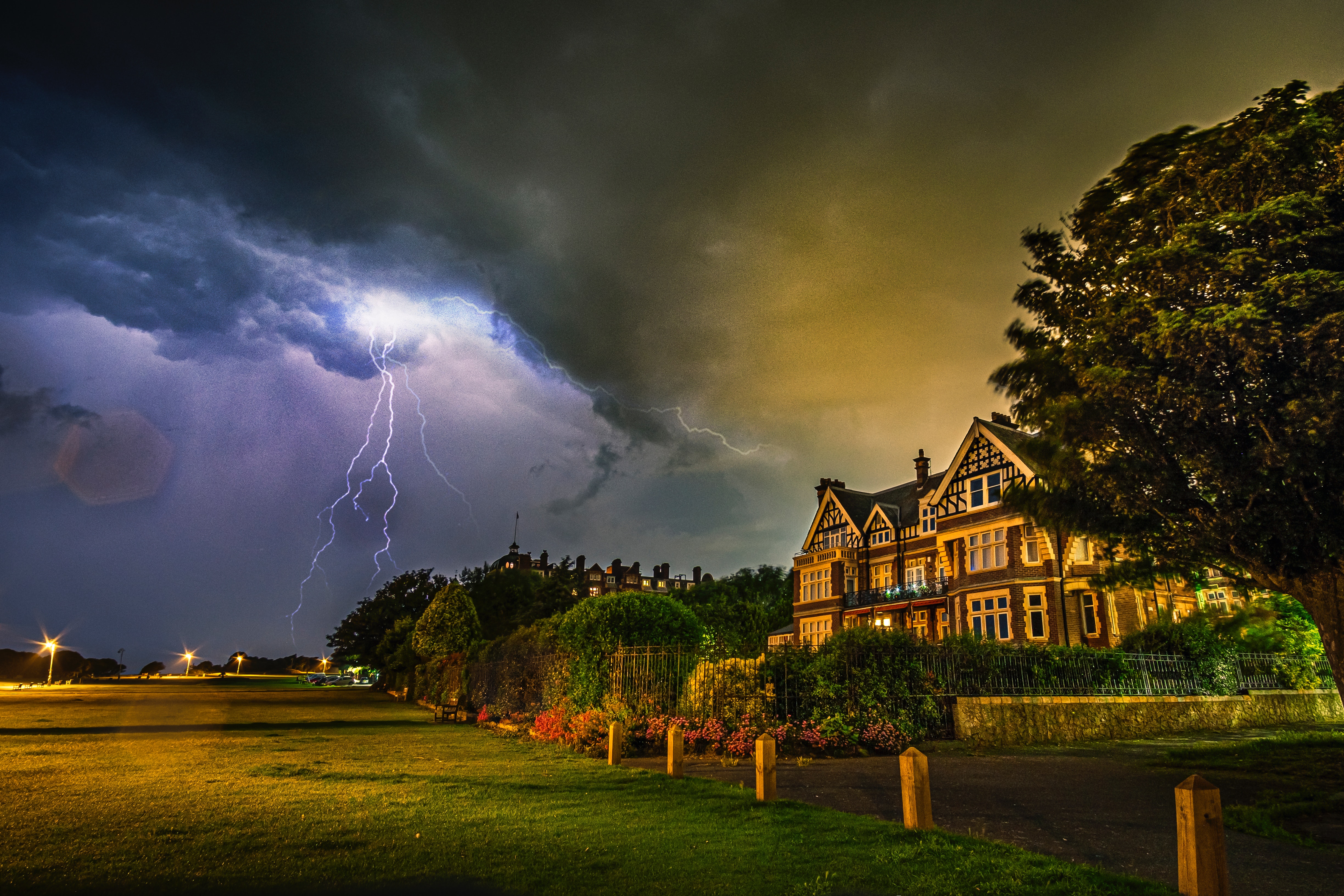
The North East coast takes the brunt of the weather. Easterly gales off the North Sea, prolonged heavy rain and the occasional named storm all test the electrical installations in offices, shops, schools, warehouses and factories. For a business, the problem is rarely the storm itself. It is the tripped board that will not reset on Monday morning, the external lighting circuit that has filled with water, or the emergency lighting that quietly failed during a power cut and nobody noticed.
This guide covers the weather related electrical faults we see most often on commercial and industrial sites across Tyneside, Wearside and the wider region, what causes them, and what a business can do to reduce the risk. It is written for facilities managers, landlords, school business managers and site owners who are responsible for keeping premises safe and open.
1. Water ingress to external lighting and distribution boards
Water is the most common cause of storm related electrical faults on commercial premises. Wind driven rain finds its way into external light fittings, car park columns, signage, external sockets and cable entries that have degraded over time. Where an outbuilding, plant room or external enclosure houses a distribution board, a failed seal or a blocked gutter above it can let water run straight onto live equipment.
The usual symptom is nuisance tripping of an RCD or RCBO, often overnight when the rain is heaviest. Resetting the device may work for a few hours, but the fault will return until the moisture is removed and the cause is fixed. Repeated tripping should never be ignored, and nobody should keep resetting a device protecting a circuit that is known to be wet.
When we attend, we isolate the affected circuit safely, carry out insulation resistance testing to locate the fault, dry or replace the affected accessories and fittings, and upgrade enclosures and glands to an IP rating suitable for the location. Where a board is exposed, we look at relocating it or improving its weather protection so the same fault does not come back next winter.
2. Lightning, voltage transients and surge protection
Direct lightning strikes on commercial buildings are rare, but the voltage transients caused by strikes on or near the supply network are not. They travel along incoming cables and can damage IT equipment, access control, fire alarm panels, building management systems, tills and machine controls. Switching on the network after a storm related outage can produce similar transients.
BS 7671 now requires a risk assessment for surge protection, and in most commercial installations surge protective devices (SPDs) are expected at the origin of the installation. Many older boards were installed before this requirement and have no protection at all. Fitting SPDs at the main switchboard, and where appropriate at sub distribution boards serving sensitive equipment, is one of the most cost effective ways to protect a business against storm damage.
If your last commercial EICR flagged the absence of surge protection, or you are not sure whether your boards have it, it is worth arranging a check before the winter storm season.
3. Storm power cuts and what happens when the power returns
Overhead line damage and network faults mean storm related power cuts are a regular occurrence, particularly for rural and edge of town sites in Northumberland and County Durham. A power cut itself is the network operator's responsibility, but how your installation behaves when the power returns is yours.
Large motor loads, heating plant and lighting all starting at once can cause protective devices to trip on restoration. Three phase equipment may restart in an unsafe state if controls are not designed for it. Freezers, server rooms and process equipment can suffer if nobody is on site to check them. For industrial sites, we often recommend a structured restart procedure, staged switching, and checks on phase rotation and motor controls after any significant outage.
Where a power cut leaves part of a site dead after the supply has returned, the fault is usually within the installation. Our commercial emergency electrician service provides callout cover to diagnose and restore power safely, so trading or production can resume as quickly as possible.
4. Emergency lighting after an outage
Emergency lighting is designed to do its job during a power failure, which means a long storm outage is effectively an unplanned full duration test. Batteries that were already near the end of their life may discharge completely and fail to recharge. Fittings that worked during the last monthly flick test may not have lasted the required duration.
After any extended power cut, it is good practice to check that emergency luminaires and exit signs have returned to normal charging, and to bring forward the annual duration test if there is any doubt. Under BS 5266, the responsible person must keep emergency lighting in working order and record tests in the log book. Our emergency lighting testing service covers monthly functional checks, annual duration tests, remedial repairs and log book records, which are often requested by insurers following a storm related claim.
5. Wind damage to external equipment
High winds damage external lighting columns, wall mounted floodlights, signage, CCTV and EV charge points. Loosened fixings and moving cables can damage insulation and expose live parts. After a significant storm, a visual walk around of external electrical equipment is worthwhile, and anything that is visibly damaged, hanging loose or leaning should be isolated and reported. Do not attempt to touch or move damaged equipment.
Reducing the risk before the next storm
Most storm related faults are made worse by issues that already existed: degraded seals, missing surge protection, overloaded circuits or a backlog of EICR observations. A planned approach to maintenance catches these before the weather does. Practical steps include:
- Checking the most recent EICR and completing any outstanding C2 and FI observations.
- Inspecting external fittings, enclosures and cable entries for damage and failed seals.
- Assessing whether surge protection is fitted and appropriate for the installation.
- Making sure emergency lighting tests are up to date and the log book is complete.
- Labelling distribution boards clearly so staff can identify circuits during a fault.
- Agreeing a callout arrangement in advance, so you know who to ring when something fails.
An electrical maintenance contract brings these checks into a single planned schedule, with reactive cover included. For multi-site operators, it also means consistent records across every building, which makes insurance renewals and audits far simpler.
Local support across the North East
LC Electrical Services NE Ltd is based at Boldon Business Park and provides commercial and industrial electrical services across the region, from coastal sites in South Shields and North Tyneside to industrial estates in Sunderland and Gateshead. All work is carried out to BS 7671 and certified on completion.
If storm damage has affected your premises, or you would like your installation checked before the winter, contact our team for a quote.